




There were just 38 states in the U.S. when the White County Agricultural Society was formed on May 4, 1879. The board was formed and made up of eleven directors after capital stock amounting to $4,000 and sold in $10 shares was reportedly immediately taken. Over the last 146 years, it’s easy to imagine how shares have trickled down through generations and accounting on certificate holders isn’t clear. Since we ran a story on the proposed leasing of the floral hall to turn it into a restaurant ran, WROY/WRUL News has talked with dozens of individuals who are or have been involved with the White County Fair over the years including several who are bona fide shareholders.
Even so, there are still hundreds of share certificates unaccounted for and no solid leads on a reliable reference of records kept. WROY/WRUL News has obtained an undated list of stockholders that amount to 322 of the 400 shares.
Why does that matter? Because while some fairgrounds in Illinois are owned and operated by county government, others like White County are held by non-profit ag societies or in some cases, private organizations. The White County Fairgrounds are run as a 501©5 non-profit. So when word got out that the fair board was attempting to lease the floral hall, it lit a fire under many in the community who wondered not only should they do so, but legally, could they.
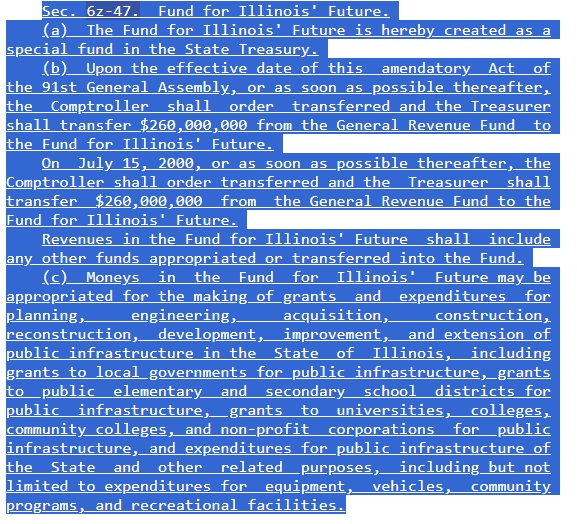 In the 91st General Assembly (1999-2000), Public Act 91-38 established The Fund for Illinois’ Future. Following its passage, Section 28 of the Comptroller’s Office appropriations clearly states the sum of $204,750 to be appropriated from the fund to the Department of Agriculture for the White County Agricultural Society for the purpose of constructing a multi-purpose exhibit barn. That would become the floral hall.
Judy Bingman, who was the White County 4-H Community Worker during this time remembers this.
Representatives of the fair association contacted White County 4-H in the early 2000s asking for Extension’s support in their quest to build a new exhibit building on the fairgrounds. In its grant application, the fair association stated the building would provide a space for 4-H and Extension events, meetings, and exhibit opportunities. They asked, and received, letters of endorsement from the White County Extension office and many 4-H volunteers and families in support of the project. It was agreed that 4-H and Extension would have access to the building at no cost for any of their activities.
Over the years, the facility has been used many times for fundraising dinners, trainings, and contests, in addition to
the 5-day activities of the annual 4-H show.
Additionally, private donations raised by White County 4-H provided the funds for the new livestock barns on the fairgrounds. 4-H volunteers provided the labor for the building of the barn. They have a 100-year lease for its free use.
4-H and fair associations are supported financially by the state’s Agricultural Premium Fund, through the Bureau of County Fairs. Exhibit premiums are reimbursed to 4-H and counties, as well as judges’ fees and some facility improvements.

The key word is multi-purpose. Opponents argue that leasing the floral hall to a singular business would nullify that multi-purpose designation causing issues. WROY/WRUL News has obtained a copy of that proposed lease (though we don’t know if it was a first draft or a final version, neither of which we’ve been told were ever signed by the fair board or potential lessee Gilbert Santos Valencia), which was for 3 years with options. It’s stated in that lease that the fair board would have rights to use the premises for elections and fair use. That raises other issues. Assuming the restaurant would serve alcohol as confirmed by county board and liquor commissioner David South, Illinois Elections forbid polling places from being held in locations where alcohol is stored. There was also concern that moving forward would result in the fair board having to repay that grant money and affect future potential funding. Furthermore, there was concern that moving forward would affect the tax-exempt status. The lease indicates the lessee would be required to pay real estate taxes if the lessee’s use of the building causes the taxes to increase. Officials have stated that it most certainly would. The lease also states if the taxes remain the same, the lessor shall pay the real estate taxes. That wording also raised concerns as one could reasonably expect fair board members to know the organization and the floral hall was tax exempt and research the implications of making such a move.
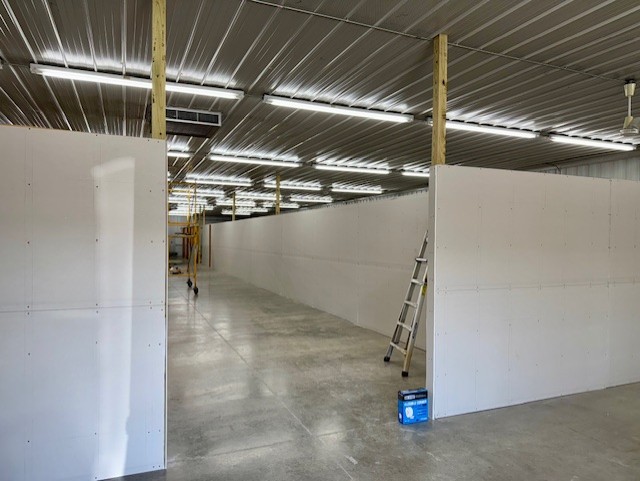
Missing from the dozens of conversations had with community members and those with either a vested interest or a part in the fair over the years is any on record comment from the fair board. Our reporter has talked to fair board President Brent Edwards multiple times over the last two weeks and delayed this update in the hopes of gaining some clarity. Edwards Friday morning said he’s still waiting on further information from state officials. Work has by all accounts ceased at the floral hall and Gilbert Santos Valencia had no further comment when we reached out to him earlier this week. He told us he was driving and would call back; to this point, he hasn’t. In the last 24 hours, the Daughters of the American Revolution announced they were moving their Festival of Trees and Craft Show scheduled for November 15th to War Horse Christian School. An anniversary party scheduled for the Sunday after our story ran had to be moved. White County Clerk Kayci Heil says she hasn’t heard anything and is continuing to search for alternative polling locations.