




Capitol News Illinois contributed to this story; WROY/WRUL News provided local scope
Hospital officials in Illinois are warning that many of them may have to cut services, lay off workers, or even go out of business due to impending cuts in federal Medicaid funding. Capitol News Illinois reported recently that Illinois is expected to lose about 48 billion dollars in Medicaid funding over the next decade to passage of President Donald Trump’s domestic policy bill.
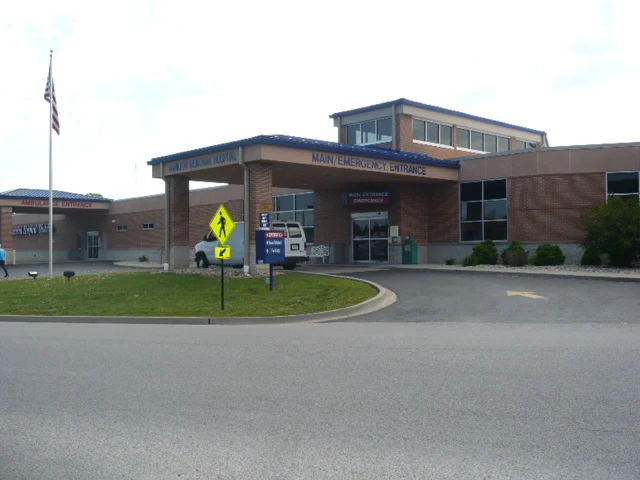
AJ Wilhelmi, who heads the Illinois Health and Hospital Association, says rural hospitals may be most at risk because they tend to serve a larger volume of Medicaid patients. Interim CEO at Hamilton Memorial Hospital District, Justin Epperson says it definitely impacts local operations, and the operation is already looking at adjustments.
“Medicaid cuts definitely have an impact on our operations, as some service lines are up to 1/3 Medicaid patients. I am of the mindset that the first approach to any financial challenge is not to cut staff or services, but to grow the right services and make others more efficient. We see December of 2026 as the start of a new landscape, though that is dependent on the fifty-billion-dollar Rural Health Fund that was added at the end of the OBBBA. This fund is supposed to be administered both evenly across states, and in a targeted fashion. The grand question is how much of that money actually makes its way to us. That Fund was added as a way to get buy-in from Senators who were holding out, so will their state see more of those targeted funds? While that answer is unknown, how that money is administered will certainly tell the story of how painful those cuts are to us. But, as far as planning, we have already begun to adjust.
I do feel that before any impacts to operations, as far as changes to staffing or services, the first impact is on cash management and investing in capital. This era of Medicaid cuts will make the purchasing of new or replacement equipment a challenge.”
Wilhelmi, meanwhile, said there is still time before the cuts begin to take effect, and he is urging state officials to begin work immediately to develop strategies to adapt to the changes.
“I think the state will need to work with stakeholders like IHA and our hospitals, other provider groups, to identify creative options to ensure that the Medicaid program can continue to be that lifeline for vulnerable patients and communities,” he said. “And that will include identifying options to fortify those programs and services, as well as identify working with our congressional delegation on ways to mitigate or further delay these changes.”
Regional legislators including State Senator Terri Bryant and State Representative Dave Severin have yet to provide their reaction.